Kevin Taylor, Training and Technical Support Manager at Marley, explains why system compatibility, independent certification and installation quality are essential to managing solar fire risk.
With solar photovoltaic (PV) installations an increasingly common feature of new-build and retrofit projects, fire safety must be a fundamental consideration from the earliest stages of specification. Selecting products that are individually compliant is not necessarily enough: specifiers need confidence that the complete system has been tested and verified for use in combination.
As the UK moves towards lower-carbon buildings, solar PV is increasingly being considered alongside heat pumps and battery storage. These technologies can reduce reliance on fossil fuels, but they also add equipment and interfaces that must be considered as part of the building as a whole.
For solar, that means looking beyond energy generation to how the roof assembly will perform over its service life, including in the event of a fire.
Growth brings greater responsibility
More than 170,000 solar PV installations took place in the UK in 2026, according to figures1 taking the total beyond two million. Driven by energy costs, decarbonisation targets, and evolving building regulations, including the Future Homes Standard, solar PV is becoming an important consideration in building design.
However, as adoption accelerates, the responsibility to specify safe, reliable solutions also grows.
Solar installations introduce electrical equipment and connections onto the building envelope, creating additional considerations for fire performance, roof integrity, and long-term maintenance. Construction details vary between projects, so one product approval should not be assumed to cover every roof or installation.
For specifiers, the challenge is not simply to select a suitable solar product. It is to ensure that the modules, mounting system, roof coverings, flashings, and electrical connections work together as an appropriately tested and compliant assembly. Architects, roofing contractors, solar installers, and electrical designers should agree the intended arrangement early, avoiding substitutions that could undermine the tested configuration.
Understanding the fire risk
The importance of this approach is underlined in a recent report2 from QBE, which found that reported solar panel fires increased by 133% between 2022 and 2025, more than twice the rate of installation growth.
Electrical faults are a key consideration. In particular, poorly made, incorrectly installed or incompatible DC connections can generate electrical arcing. Under certain conditions, this can ignite surrounding combustible materials, potentially allowing fire to spread into the roof construction.
The risks are not confined to the solar module itself. Mounting arrangements, penetrations, flashings, and the interfaces between products can all influence the performance of the installed system. A product that performs satisfactorily in isolation may not deliver the same level of protection when combined with components that have not been assessed for that application. Roof-integrated systems must also maintain weatherproofing, so fixing points and interfaces should be designed rather than improvised on site.
Consequently, system selection should be based on evidence of performance, rather than assumptions drawn from individual product credentials or general claims of compliance. A minor component change can affect whether the assembly matches the tested configuration.
Compliance is about the complete system
Appropriate certification provides an important framework for demonstrating product quality, installation competence, and performance. For relevant UK installations, MCS certification is widely used to provide assurance around the design and installation of solar PV systems. Flexi-Orb offers an alternative certification route for eligible installations.
On new-build projects, an MCS certificate is not a universal statutory requirement, but certification may be requested by building control bodies, warranty providers, mortgage lenders, or other stakeholders. Specifiers should establish the applicable project requirements early and verify that the proposed products and installation arrangements satisfy them. Clarify who will check certification, retain evidence, and document the installation at handover.
Crucially, certification of individual components does not automatically demonstrate that they are suitable or certified for use together. Under the MCS 012 framework for roof-integrated solar mounting kits, the relevant certificate should be checked to confirm that the proposed solar module is specifically listed for use with the mounting system and has the required fire classification for that combination. MCS 005 certification of a module and MCS 012 certification of a mounting kit should not, in themselves, be interpreted as evidence that the combined assembly has been approved.
Specifiers should review the actual scope of certification, including model references, permitted combinations and any installation conditions. Where claims relate to roof fire performance, the relevant test classification and evidence should also be checked against the intended application and project requirements. These records also help future maintenance teams identify approved replacements.
Evidence-led specification
The Marley SolarTile® roof-integrated solar system achieves BRoof (T1, T2, T3 and T4) high classifications in European fire safety testing for resistance to external fire exposure and fire penetration. The business also holds independently verified BBA Solar System certification covering the solar panels, flashings, and their combined system.
This system-level evidence helps specifiers assess the performance of the specified combination, rather than relying solely on separate component approvals. It supports informed discussion of performance against the roof build-up and project requirements.
The certificate scope and instructions should confirm that the design reflects the assessed configuration.
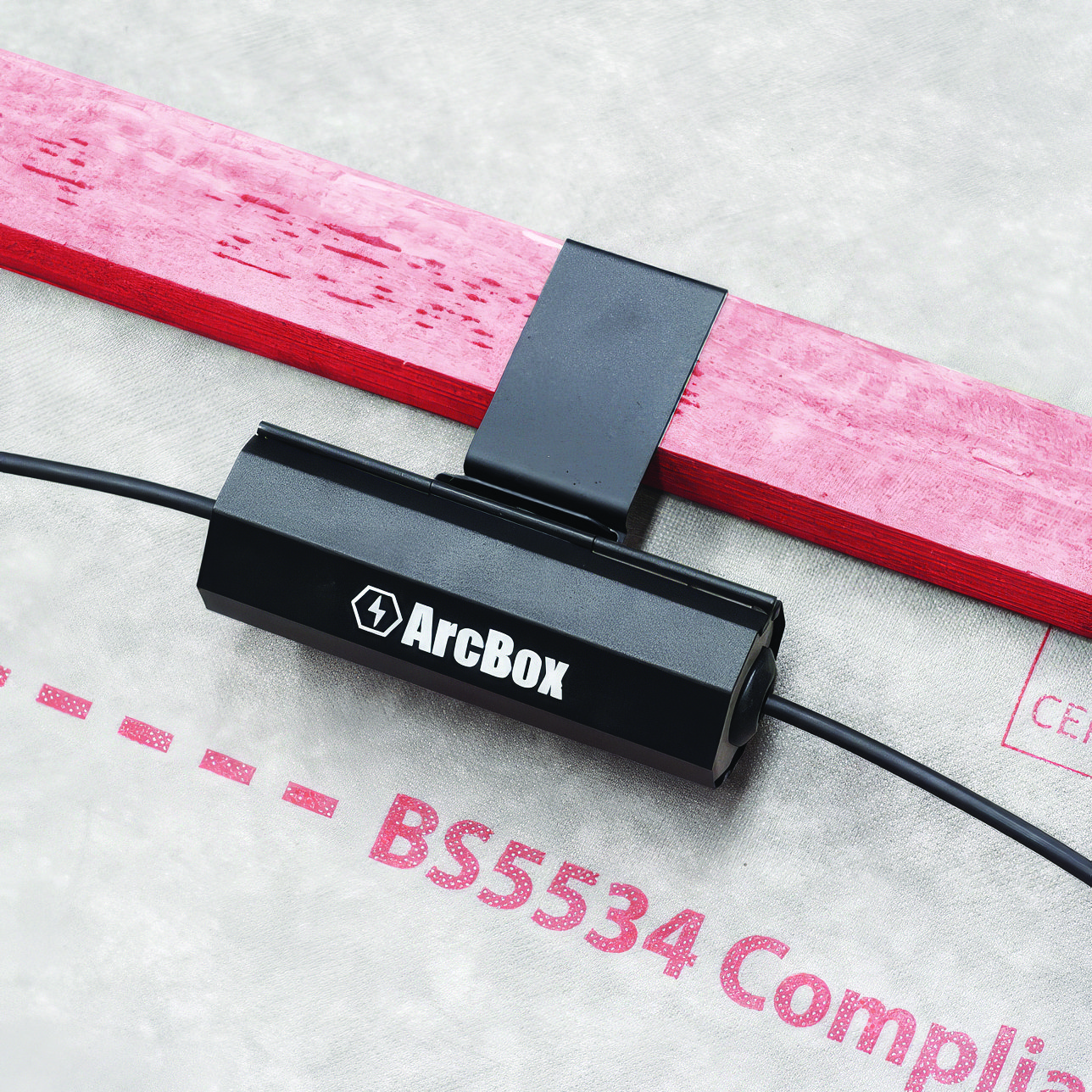
Additional protection can also help address electrical risks. Marley’s solar solution incorporates ArcBox, a two-click enclosure for a DC connector designed to contain an electrical arc and help prevent it spreading to surrounding combustible materials. Such measures complement correctly matched connectors, sound cable management, good installation practice, and accessible maintenance documentation.
Make safety part of the brief
Finally, installation quality is equally important. Specifiers should define clear requirements for competent installers, correct connector matching, adherence to manufacturers’ instructions and the provision of certification and handover documentation.
Coordination between roofing contractors and solar installers is particularly valuable where roof-integrated systems are involved. Responsibilities for roof checks, sealing interfaces, cable routing and recording deviations should be agreed in advance.
Maintenance should also be considered at specification stage. Future repairs may involve replacing a module or connector, and records of approved combinations can prevent routine work introducing an unverified substitution. Building owners should know what documentation to retain and whom to contact before changes are made.
Ultimately, effective solar fire safety begins long before panels reach the roof.
By specifying compatible components, verifying independent system-level testing, and requiring installation in accordance with the approved configuration, owners can make better-informed decisions that support compliance, protect building occupants and safeguard property throughout the building’s entire operational life.
For a renewables-led industry, that discipline is not separate from the energy transition. It helps ensure low-carbon technologies are integrated into buildings responsibly, with safety and long-term performance designed in from the start.
www.marley.co.uk
Source
- https://www.gov.uk/government/news/first-regionalsolar-breakdown-as-installations-hit-record-highs
- https://qbeeurope.com/news-and-events/pressreleases/solar-panel-fires-increasing-at-more-thandouble-the-rate-of-installations/


