Adam Tkacz, Business Development Director – Sustainable Heat at GTC, discusses that low-carbon homes need shared energy infrastructure, not just heat pumps. Planning integrated heating networks from the outset can cut carbon, reduce grid demand and create more resilient, future-ready developments.
The Future Homes Standard has changed the conversation around residential development. The debate is no longer whether new homes should be low carbon, but how the industry delivers them at scale without compromising affordability, build quality or customer experience.
For too long, conversations around decarbonising housing have centred on the technologies installed inside individual homes. Heat pumps have become the headline, yet they are only one part of a much bigger picture. The real challenge is creating the energy infrastructure that allows thousands of low-carbon homes to operate efficiently and reliably for decades to come.
As housebuilding continues and pressure on the electricity network grows, infrastructure is becoming one of the biggest strategic decisions a developer can make. The projects that succeed won’t simply specify low-carbon heating technologies, they’ll design communities around integrated energy networks that reduce carbon, minimise grid impact and remain adaptable as technology evolves.
Infrastructure is the missing piece
Heating accounts for a significant proportion of a home’s carbon emissions, making it one of the most important elements of the Future Homes Standard. But replacing gas with electric heating alone isn’t enough.
Developers must also consider electrical capacity, land availability, planning constraints, whole-life operating costs, maintenance responsibilities and the long term experience of homeowners. Designing each home as an isolated system can increase complexity, place greater demand on local electricity networks and create challenges as developments increase in size.
Instead, we’re seeing growing recognition that shared infrastructure offers a more resilient and scalable approach. Just as developers routinely think collectively about roads, drainage and utilities, low-carbon heat should be viewed as community infrastructure rather than a collection of individual systems.
Smarter use of the ground beneath our feet
One of the clearest examples is the growth of Smart Networked Ground Source Heat Pumps (GSHP). Rather than every property requiring its own ground array, a networked approach creates a shared ambient loop network beneath the development. Individual homes retain their own heat pump, giving residents complete control over heating and hot water, while benefiting from a communal underground network.
Because ground temperatures remain relatively stable throughout the year, these systems consistently operate at high efficiencies, producing around four units of heat for every unit of electricity consumed. The result is a heating solution capable of delivering 75% lower carbon emissions than traditional gas heating.
Importantly, the benefits extend beyond carbon reduction. By sharing infrastructure across an entire development, Smart Networked GSHPs can reduce peak electrical demand by up to 50% compared with individual air source heat pumps, easing pressure on local electricity networks and reducing the need for costly reinforcement works. They also eliminate the need for external units at every property, improving streetscapes while giving developers greater flexibility over site layouts.
As developments become larger and more complex, these networked systems demonstrate how low-carbon heating can be delivered without treating every home as a standalone challenge.
Heat networks have entered a new generation
Heat networks have traditionally been associated with high-density, high-rise developments, but the technology has evolved significantly.
Modern low-temperature heat networks are now supporting low-rise, low-density residential developments, combining the efficiency of shared infrastructure with the performance expected by today’s homeowners.
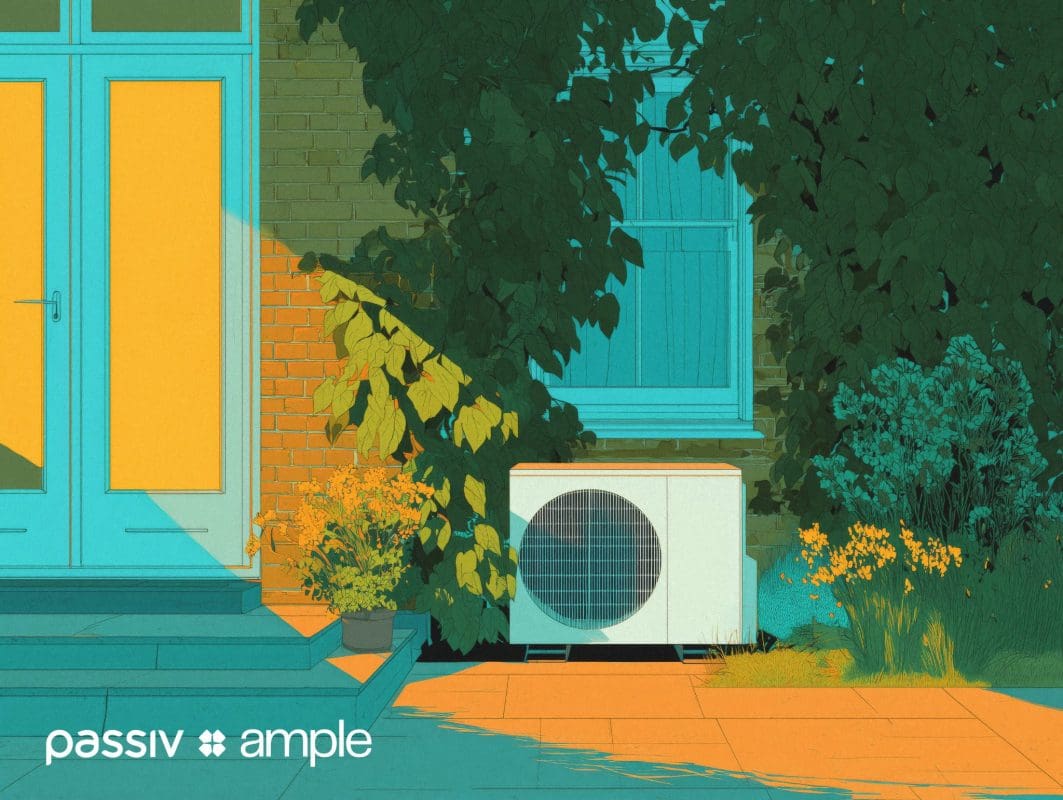
Community Heat Hubs exemplify this next generation of heat networks. Instead of installing an individual external heat pump at every property, central air source heat pumps generate low-carbon heat before distributing it through a shared low-temperature network serving the whole development.
The approach offers significant operational advantages. By centralising plant, maintenance and future technology upgrades become simpler while homeowners benefit from a quieter environment without external heating equipment.
The model also delivers measurable infrastructure benefits. Community Heat Hubs can reduce peak site-wide electricity demand by up to 15% through integrated thermal storage, helping developers manage electrical capacity while improving network resilience. They are capable of delivering up to 80% carbon savings compared with traditional gas heating and produce three to four units of heat for every unit of electricity consumed, making them one of the most efficient low-carbon heating solutions currently available for residential developments.
Planning for communities, not just homes
The most successful low-carbon developments are those where infrastructure conversations begin at the earliest stages of design.
Heating strategies can no longer be considered in isolation or left until detailed design. Decisions around energy infrastructure influence site layout, utility coordination, planning outcomes, and long-term operational performance.
Bringing developers, planners, architects, utility providers and energy specialists together from the outset creates opportunities to optimise land use, coordinate utility installation and design communities that are genuinely future-ready rather than simply compliant on completion.
This integrated approach also enables multiple utility networks to be delivered through a coordinated programme, reducing construction complexity while improving long-term asset management.
Future-proofing housing for the decades ahead
The Future Homes Standard should not be viewed as the finish line. It is the beginning of a new generation of residential infrastructure.
The homes being built today will still be occupied well beyond 2075. During that time, electricity generation will continue to decarbonise, energy technologies will develop, and customer expectations will evolve. The infrastructure we install now must be capable of adapting alongside them.
That means looking beyond individual products and embracing systems designed for resilience, flexibility and whole-life performance.
No single heating technology will suit every development, but the direction of travel is becoming increasingly clear. Shared infrastructure, whether through Smart Networked GSHPs or modern Community Heat Hubs, offers developers practical, scalable solutions that reduce carbon emissions, ease pressure on the electricity network and create communities built for the long term.
www.gtc-uk.co.uk