
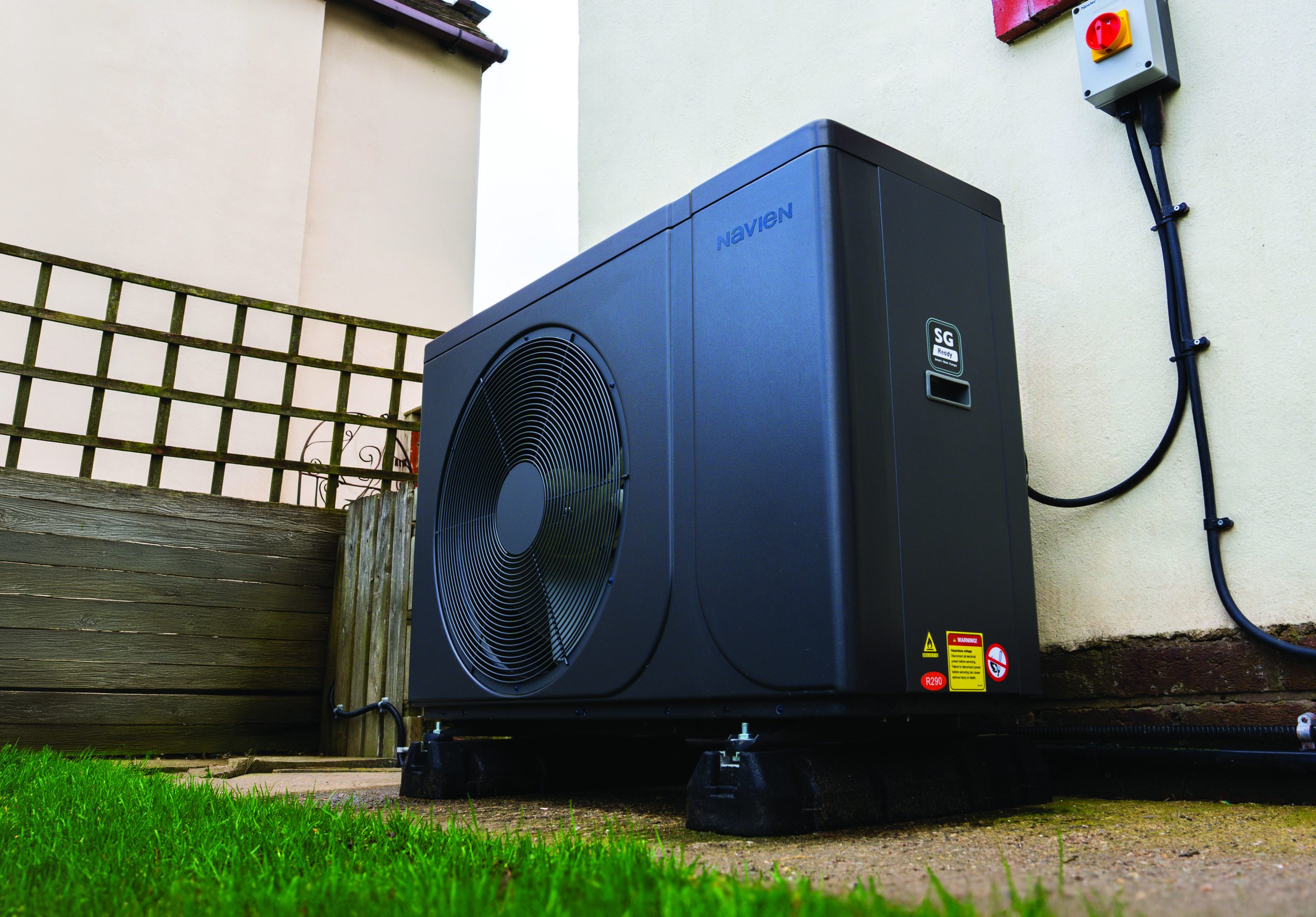
Greg Banham, Commercial Director for Navien UK, explores the considerations facing installers as they help off-grid homeowners navigate this transition.
As the UK moves towards lower carbon heating, homes that sit outside the gas network face a distinct set of challenges compared with properties connected to it.
Heat pumps have an important role to play in reducing emissions from heating, although they will not be suitable for every property without some consideration of the wider system. Off-grid homes are often older buildings with higher heat demands, existing high-temperature heating systems and limitations in their electrical infrastructure, all of which can influence what is technically achievable and financially realistic.
This does not mean heat pumps are unsuitable for off-grid properties. Rather, it highlights the need to assess the building and its existing heating arrangements before deciding which technology is right. Installers must take a whole-system view, weighing up technical requirements alongside the homeowner’s budget, preferences and expectations. This will be essential to making the transition to lower carbon heating work in practice.
Understanding off-grid homes
Many rural properties are not connected to the gas network and depend on oil to heat their homes. For these homeowners, replacing an oil boiler can require a more detailed assessment than simply exchanging one appliance for another. Older or larger buildings may have substantial heat requirements, while their existing heating systems have often been designed around higher flow temperatures and adapted over many years.
Heat pumps can work effectively in these settings, but their suitability depends on the characteristics of the property and the heating system already installed. Before recommending a solution, installers need to establish whether existing radiators can provide sufficient heat at lower flow temperatures, whether the electrical supply can support the installation and where an outdoor unit could be positioned appropriately.
Hot water provision is another important consideration, particularly when replacing an oil combi boiler. A move to a heat pump may require the introduction of a hot water cylinder, alongside potential changes to controls, pipework or radiators to meet the system’s requirements. Some rural households may also have an oil-fired range cooker or another appliance they wish to retain, while larger properties might already use a cascade arrangement of boilers to meet their heating demand.
Understanding how these elements work together helps installers identify an option that suits the property and the people living in it. It also allows them to establish what changes are necessary, which can be delivered within the available budget and whether the proposed system is a practical long-term choice.
Why switching isn’t always straightforward
One of the main considerations when moving from an oil boiler to a heat pump is the difference in operating temperatures. Heat pumps generally work at lower flow temperatures than traditional boilers, meaning the existing heating system may need to be adapted to deliver the required level of comfort.
A heat loss calculation provides an important starting point by establishing the amount of heat a property needs. Installers can then evaluate whether the current radiators, insulation and wider heating system are capable of meeting that demand, or whether improvements are required before installation.
Depending on the property, this could involve fitting larger radiators, upgrading insulation or making adjustments to pipework and controls. The physical installation also needs to be factored into the assessment, including access to a suitable outdoor location and the space required for internal equipment. These considerations can be particularly important in older homes where the heating system has evolved over time.
For homeowners, the cost and disruption associated with these changes may influence the decision as much as the technology itself. Replacing several components at once can increase the initial investment, while the timing of the replacement may determine how much flexibility the household has. Someone planning ahead while their existing boiler remains operational has more opportunity to explore the options, whereas an unexpected breakdown during winter may create an immediate need for a reliable replacement.
Heat pumps should not be discounted on this basis. When the property is suitable and the system has been properly designed and installed, they can provide an effective lower-carbon heating solution. The priority is to establish what the home requires before deciding which technology to install.
What government support means
Government policy is helping to encourage the move away from fossil fuel heating through initiatives such as the Boiler Upgrade Scheme1. Since 21 July 2026, eligible off gas-grid properties in England and Wales replacing oil or LPG heating can receive up to £9,000 towards an air-to-water or ground source heat pump, provided the installation meets the scheme’s requirements.
This support can help reduce the upfront cost for homeowners, although it will not necessarily cover all the work required to prepare a property for a new heating system. Where additional radiators, insulation, electrical work or hot water system alterations are needed, these costs must also be taken into account when assessing the overall investment.
The Government’s November 2025 consultation on alternative clean heating solutions2 also recognises that some properties present greater challenges than others. It considered alternative technologies for lower-carbon heating in situations where installing a heat pump or connecting to a heat network could be difficult, while making clear that a low-carbon option should not be installed where it is unsuitable for the property.
For heating professionals, this reinforces the importance of understanding the range of technologies available rather than approaching every replacement as the same exercise. Heat pumps will be appropriate for many homes, while others may need improvements before installation or could benefit from alternative approaches as technology and policy continue to develop.
Putting homeowners first
Alongside the technical assessment, installers need to understand what a change in heating means for the household. The cost of the work, the disruption involved and the time available to complete it can all influence which option is most appropriate.
A homeowner with a functioning oil boiler may have the opportunity to plan ahead, investigate funding and make improvements before changing their heating system. By contrast, someone facing an unexpected boiler failure may need a solution quickly, with limited scope for extensive building work. Affordability can also be a deciding factor for households that want to reduce their carbon emissions but cannot undertake a substantial heating upgrade in one go.
Installers are well placed to guide these decisions because they can assess the building first-hand, understand how the existing system operates and discuss the practical implications with the homeowner. Their advice needs to bring together the technical requirements, available budget and realistic timescales, giving customers a clear picture of the options and the work each one involves.
This is changing the role of the installer, who increasingly needs to look beyond the individual appliance and consider the heating system as a whole. Assessing the building, understanding customer preferences and identifying suitable technologies all form part of helping homeowners make informed decisions.
Manufacturers also have a role in supporting this process. If heating decisions depend on the wider system rather than a straightforward appliance replacement, installers need access to reliable products, clear technical guidance, appropriate training and responsive support. This can help them assess different properties with confidence and recommend solutions that reflect the requirements of each installation.
Finding a way forward
The transition to lower-carbon heating will take different forms across the UK, particularly among off-grid properties where building characteristics, existing systems and available infrastructure can vary considerably. Heat pumps will remain an important part of this transition, but their suitability must be considered in the context of the individual property and the homeowner’s circumstances.
For installers, the task is to bring these factors together and provide advice that is technically sound, financially realistic and practical for the customer. A thorough assessment of the home, combined with an understanding of the available options, can help homeowners make informed choices while supporting progress towards lower carbon heating.
Ultimately, successful decarbonisation depends on finding a heating solution that works for the home and the people living in it.
Source
- www.ofgem.gov.uk/environmental-and-social-schemes/ boiler-upgrade-scheme-bus/property-owners
- https://www.gov.uk/government/consultations/ exploring-the-role-of-alternative-clean-heating-solutions