
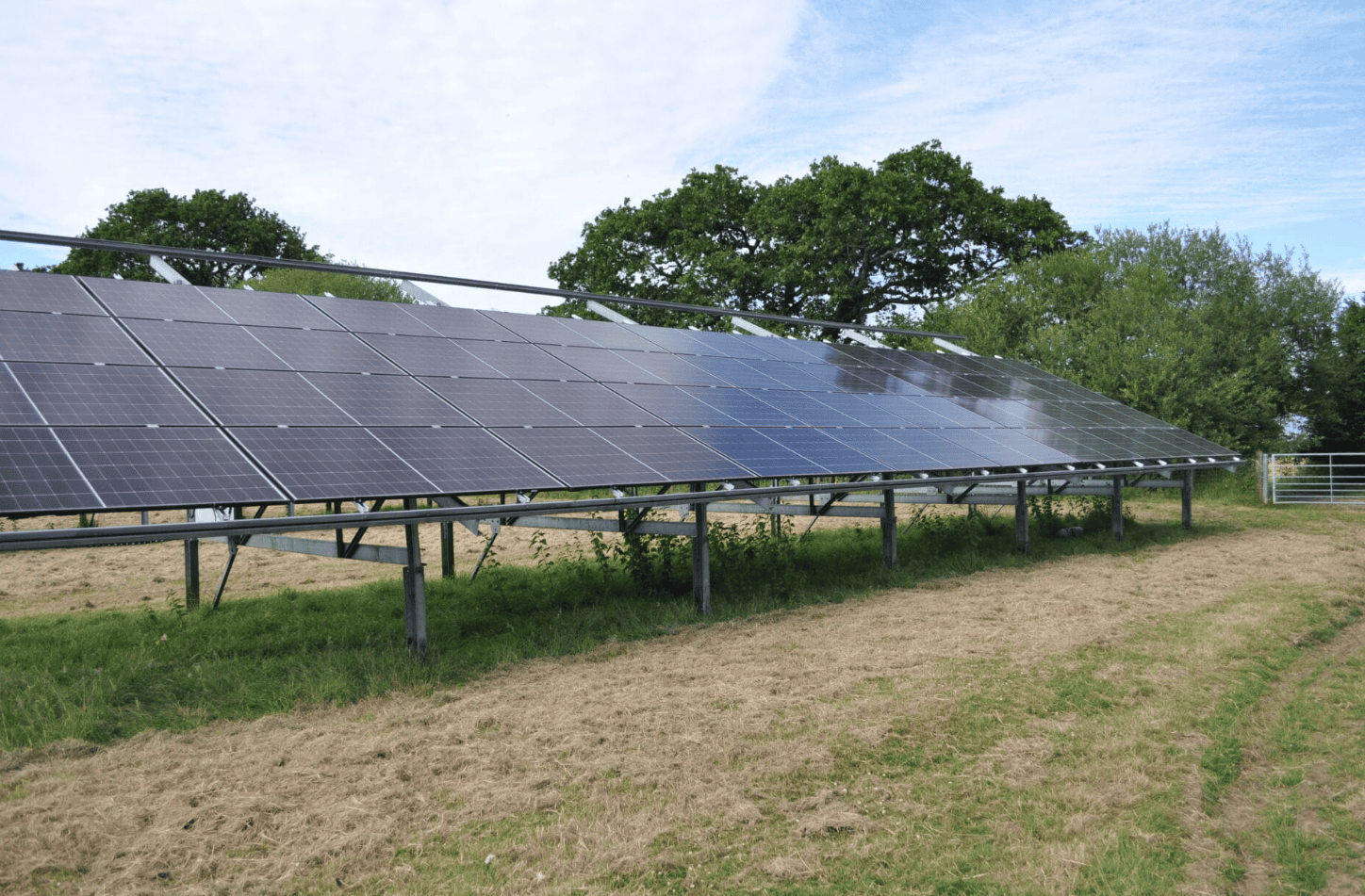
Solar farms have collectively paid back £26.3 million more to consumers through the government’s Contracts for Difference scheme than they have received in support over the past decade. The figures underline how the How the Energy Independence Bill announced today will help deliver cheaper, cleaner power.
Often thought of wrongly as a subsidy to the renewables industry, the system has resulted in payments moving the opposite way. This year alone, the sector has enabled solar farms to cut bills by least £29.4m – with savings set to rise as more are built.1
Payments to the first round of solar farms backed by Contracts for Difference (CfDs) have come to just under £700,000 so far this year. These were built over 2015-2017, when the industry was in its infancy and costs were far higher than now. But solar farms with contracts made in the fourth, fifth and sixth rounds have paid back £31.7m over 2026. Solar was out of scope for the second and third rounds of the scheme.
The CfD system encourages investment in renewables by guaranteeing a price for power over a 15 or 20-year period. The amount is pushed down through a competitive auction process. If the wholesale cost of power is lower than that price, generators’ revenue is topped up. But the prevailingly high cost of power has meant that the flip side of the scheme has come to the fore.
When the market price rises, revenue is paid back, helping to protect consumers from damaging spikes caused by geopolitical upsets such as the wars in Iran and Ukraine.
The reduction in consumer bills is on top of the amount saved by not having to generate power from natural gas – which both sets the wholesale price of power and is the most expensive source of electricity in Great Britain.
From March to the end of August alone, solar farms and rooftop panels across Great Britain are estimated to have generated 16 terawatt-hours of energy. If all of that electricity had been generated through burning natural gas instead, purchasing it would have cost around £1.36bn at daily wholesale prices, according to our analysis.
Review
As Energy Minister Michael Shanks said to the Lords’ Environment and Climate Change Committee yesterday, the CfD system has been mirrored by other countries, “partly because the two-sided nature of it means there’s investor certainty in revenues. But we also as consumers benefit if the wholesale price goes beyond that.”2
The results of the CfD Allocation Round 8 (AR8) auction will be disclosed before the end of the year.
But the minister also indicated that there would be a pause to review the system before opening AR9. This appears to be linked to the process of reinforcing the electricity grid, to ensure that large volumes of wind power can be distributed properly. As things stand, they can be forced to curtail generation in one location while gas turbines are spun up in another – a waste that Shanks blamed both on grid operators and limited energy storage capacity.
“Though we share the minister’s frustrations on the pace of investment in the grid, it is clear from today’s Energy Independence Bill that the Government’s backing for solar and storage continues to be steadfast. We look forward to how it will deliver faster grid connections at utility scale while simplifying the consumer experience, too. While investors should remain confident in the energy transition, we do need urgent clarity on the review of Contracts for Difference, so that we can get on with delivering the cheap, clean and secure power Britain needs so much.”
Energy Independence Bill
The bill includes many provisions.3 Among them are:
- A statutory regime for distributing community benefits from solar and wind farms. Precise terms would be set via regulations but the Government has previously said it would adopt a minimum of £700/MW for solar farms. It is unclear if this measure is expressed as AC or DC capacity.
- Setting new requirements for community ownership, potentially requiring developers to offer a stake of up to 20% of capital costs to local people for projects over one megawatt in capacity. Precise terms would be set in regulations.
- Strengthening the regulatory powers and duties of Ofgem.
- Facilitating the delivery of Reformed National Pricing, following the Review of Electricity Market Arrangements.
- Ensuring that battery energy storage systems sold in Great Britain have ‘smart’ capability, allowing charging and discharging to change according to the needs of the electricity system.
- Removing certain charges on electricity that is stored and then re-exported to the grid.
- Streamlining rules on access rights, accelerating grid reinforcement.
- The establishment of the Warm Homes Agency, “a body dedicated to making homes warm, green and cheaper to run,” says an explanatory note accompanying the bill. “The WHA will support consumers to upgrade their homes by seeking to simplify the consumer experience whilst providing a trusted source of advice and support,” it adds.4
- Requiring electricity suppliers to provide certain services to community energy groups, including the provision of electricity directly to end users – a long-held demand by the sector as it would pass on savings to consumers.
- Changes to the administration of Renewable Electricity Guarantees of Origin and to the legacy Feed-in Tariff system.
- Moving payments for the legacy Renewables Obligation scheme from bills to the Exchequer.
“There is much to welcome in this package, which will do much to push Britain further down the path of ditching expensive gas in favour of cheap renewables and incentivise electrifying the economy. However, the solar industry does have longstanding concerns about how mandating an unduly high level of community benefits could damage that progress, so we have argued for a level of £400/MW of AC capacity, lasting for 20 years. We believe this would be the most appropriate level to allow industry to continue to deliver low-cost, homegrown electricity through ground-mounted solar,” said Gemma Grimes, Director of Policy and Delivery at Solar Energy UK.
“There are also practical concerns about selling stakes in projects to local people, which could expose them to financial risk. We look forward to engaging on the bill as it passes through Parliament,” she added.
Based on passage of previous legislation, we would expect the Energy Independence Bill to finish its passage through Parliament by July 2027.
Source
1. Actual CfD Generation and avoided GHG emissions – Low Carbon Contracts Company
2. House of Lords’ Environment and Climate Change Committee, Tuesday 3 November 2026
3. Energy Independence Bill – Parliament
4. Explanatory notes – Parliament