As the UK accelerates its transition towards low-carbon heating, attention is often focused on system efficiency, refrigerant choices and next-generation heat pump technologies. But according to James Graham, Managing Direct of BITZER UK, the success of this transition will depend just as much on the people installing, commissioning and maintaining these systems as it will on the equipment itself.
“One of my immediate priorities since stepping into the role has been listening – to customers, contractors and our own team,” says BITZER UK. “A consistent message has emerged: as systems evolve, investment in skills is just as important as investment in technology.”
The shift towards lower-GWP refrigerants, the increasing adoption of natural refrigerants such as R290 and R1270, and the growing complexity of commercial and industrial heat pump systems are all placing new demands on engineers. At the same time, the sector continues to face a well-documented skills gap that risks slowing deployment if not addressed collaboratively.
“The cooling sector is facing a critical skills gap, and we cannot solve it in isolation,” James notes. “We are proud to support initiatives such as the Institute of Refrigeration Industry Skills Alliance because they help bridge the divide between education and industrial reality.
By uniting partners and strengthening training standards, we’re not just filling roles – we’re securing the long-term resilience of the industry.”
Training as a foundation for adoption
For BITZER, training is not an adjunct to product development, but a core part of enabling the wider adoption of low-carbon technologies.
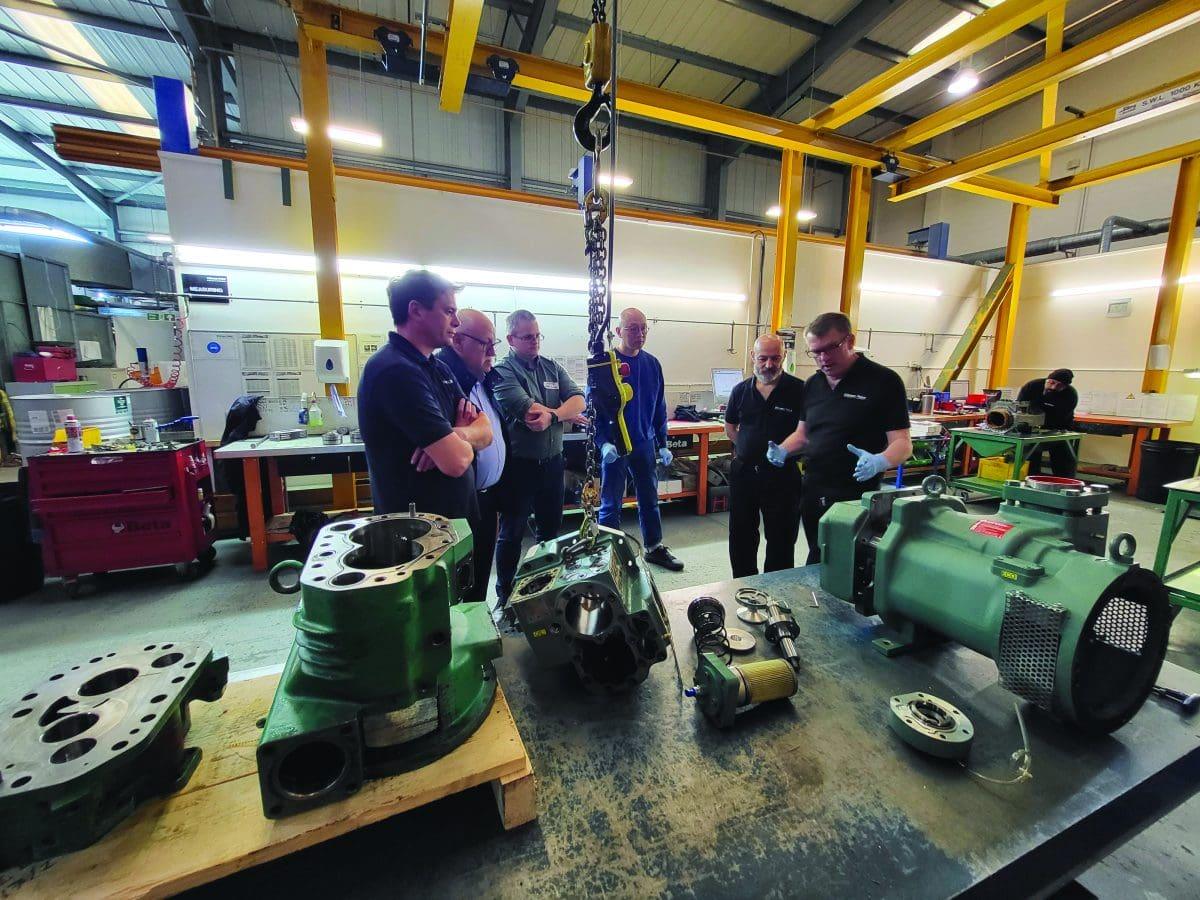
The company is investing in structured training programmes at its UK headquarters in Milton Keynes, alongside field-based technical support and refrigerant handling courses.
“As systems become more complex, engineers need more than product familiarity – they need confidence working across different refrigerants, applications and control strategies,” James explains. “That is particularly true in the industrial and commercial heat pump sector, where system scale and operating conditions demand a broader level of technical understanding.”
Preparing for a natural refrigerant future
The transition towards lower-GWP and natural refrigerants is reshaping system design across the industry.
To support this transition, the company has developed compressor solutions designed for use with hydrocarbon refrigerants such as R290 and R1270, which are particularly well suited to heat pump applications in commercial and industrial settings.
At the same time, BITZER UK expects increasing adoption of CO2 systems and ammonia-based industrial applications, particularly in larger-scale installations where efficiency and performance are critical.
However, the company is clear that technology alone will not drive adoption.
“Natural refrigerants and next-generation systems are already available, but their success depends on engineers being confident in how to apply them safely and effectively,” James says. “That is where training and knowledge transfer become essential.”
Digitalisation and doing more with less
Alongside skills development, BITZER also sees digitalisation as a key enabler for the sector, particularly as labour shortages continue to impact the industry.
Digital monitoring and predictive maintenance tools are increasingly being used to support engineers in diagnosing faults, optimising system performance and reducing downtime.
“Digitalisation is a natural progression, as it allows faults to be identified and rectified remotely. Engineers will be able to do more with fewer resources, which is increasingly important given the current skills shortage. Hence, it is not about replacing expertise – it is about enhancing it.”
A shared responsibility for the future
With heat pump deployment expected to rise significantly in the commercial and industrial sectors over the next decade, BITZER UK believes the responsibility for supporting the workforce must be shared across manufacturers, contractors, wholesalers and industry bodies.
This means continuing to invest in training infrastructure, supporting industry-wide initiatives, and ensuring engineers have access to the knowledge and tools they need to work confidently with evolving technologies.
www.bitzer.de/gb/en/