Department for Energy Security and Net Zero, The Rt Hon Miatta Fahnbulleh MP and Martin McCluskey MP announce how the government’s Warm Homes Loan scheme can help households install clean energy technology and save money on bills.
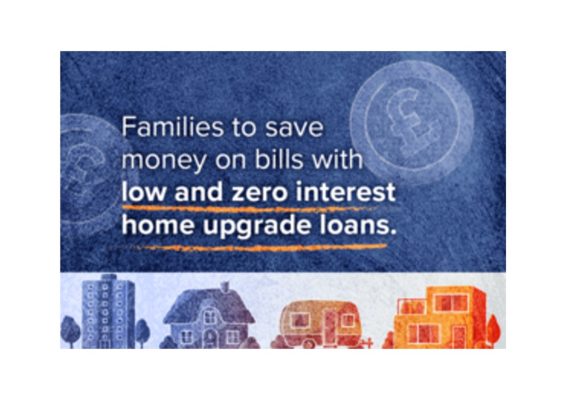
Households will save money on their energy bills thanks to the new Warm Homes Loan Scheme for technology like heat pumps, batteries and solar panels.
The no and low-interest loans will allow people to install clean energy technology without any upfront cost. They will be able to spread payments over many years. Demand for these technologies is soaring, with almost 150,000 solar panel installations in first six months of this year. Heat pump sales also reached a record high in 2025.
Why?
Energy is an everyday essential that must be affordable for everyone.
One of the best ways to achieve that is by helping more people with the upfront cost of installing things like solar panels, a battery or a heat pump. These upgrades can reduce energy bills and leave households less exposed to price shocks caused by conflict abroad.
How?
New, government backed no and low-interest loans will allow people to install clean energy technology without any upfront cost, instead spreading payments over many years, and cut their energy bills quickly.
Installing a heat pump, battery and solar panels could help families save up to £550 a year on their energy bills, rising by a further £300 a year with a time-of-use tariff.
Who?
These loans are available to households across the entire UK – in England, Scotland, Wales and Northern Ireland.
What?
The government has worked with lenders to deliver an up-to-5 per cent reduction in interest rates from regular loans offered by banks or high street lenders.
For example, a homeowner borrowing £10,000, at 8%, over seven years could expect to repay around £155 a month with a loan available right now. Through the loan scheme, they could save up to £285 a year on repayments.
Whare?
Ten lenders are initially offering loans, some interest free, meaning people can shop around for the one that works best, with up to thirty years to repay in some cases.
These lenders are:
- Homeserve (partnering with E.On)
- Hometree Finance
- Propensio
- Secure Trust Bank
- Selina Finance
- South Manchester Credit Union
- Sunsave
- Tandem Bank
- The Money Co-op
- This Bank
Homeowners will also be able to combine a loan with a grant of up to £9,000 through the government’s Boiler Upgrade Scheme (and Home Energy Scotland in Scotland), further reducing the cost of installing a heat pump.
How much?
The maximum size of loan supported for each available technology is:
- solar panels – up to £15,000
- electrical storage battery – up to £15,000
- air-water source heat pump – up to £20,000
- air-air source heat pump – up to £10,000 (when MCS certification available)
- ground source heat pump – up to £35,000
- biomass boiler – up to £20,000
- heat network connection – up to £7,500
- micro-renewable system – up to £20,000
Will they be installed safely?
All installations, except for heat network connections, will be carried out by MCS-certified installers, giving consumers confidence that recognised technical and consumer-protection standards will be met.
Energy Secretary Miatta Fahnbulleh said: “Energy is an everyday essential that must be affordable for everyone. These government-supported loans will help families across the UK upgrade their homes with no upfront costs to make them warmer and cheaper to run.”
Lisa Cooke, Managing Director at MCS: “With 2026 set to be another record-breaking year for certified renewable installations, it’s clear that more people than ever before are putting their confidence in home-grown energy. The introduction of the Warm Homes Loan Scheme builds on this momentum, helping more households access the benefits of low-carbon technologies.
“Delivering high-quality outcomes for consumers becomes even more important as installation volumes rise. The requirement for small-scale renewable installations delivered under the Warm Homes Loan Scheme to be MCS certified provides that assurance – in the business installing them, the products used, and the protections in place if something does go wrong. It is a reflection of the changes MCS has made which put consumer protection at the heart of our Scheme and demonstrates the commitment to quality that all MCS certified installers have made.”